The Brain's Superpower
What is Neuroplasticity?
Your brain is remarkably adaptable — a property called neuroplasticity. It means your brain can reorganize itself by forming new neural connections throughout life.
Neuroplasticity allows neurons (nerve cells) in the brain to compensate for injury and disease and to adjust their activities in response to new situations or changes in their environment.
Key Insight
The key to harnessing neuroplasticity is providing the right type of stimulation, at the right intensity, with enough repetition to drive lasting neural change.
Hope for Recovery
Even after injury, the brain can form new pathways to regain lost functions.
Lifelong Potential
Neuroplasticity occurs at any age — it's never too late to make positive changes.
Targeted Therapy
Understanding plasticity principles allows us to design more effective rehabilitation.
Why It Matters
Why Neuroplasticity Matters in Recovery
Rehabilitation programs are designed to unlock your brain's potential for rewiring and recovery. By applying the principles of neuroplasticity, we can help you regain function and independence.
Key Principles
10 Core Principles
These evidence-based principles guide how we structure our rehabilitation programs to maximize neuroplastic change.
Use It or Lose It
Neural pathways weaken without regular use
Use It and Improve It
Practice strengthens neural connections
Specificity
Training must be task-specific for best results
Repetition Matters
High repetition drives lasting neural change
Intensity Matters
Sufficient intensity is needed to induce plasticity
Time Matters
Different plasticity occurs at different stages
Salience Matters
Meaningful activities enhance learning
Age Matters
Plasticity occurs across the lifespan
Transference
Skills can transfer to related activities
Interference
Some experiences can impede plasticity
Our Approach
How We Apply Neuroplasticity
We use advanced technologies that harness your brain's natural ability to rewire.
Traumatic Brain Injury Recovery
Specialized protocols for TBI rehabilitation using neuroplasticity principles.
Advanced Tech
Cutting-edge rehabilitation technology to accelerate neural adaptation.
Personal Care
Customized rehabilitation plans tailored to your specific needs and goals.
Our Technology
Technologies That Amplify Neuroplasticity
Each of our technologies is specifically designed to provide the type of stimulation that drives neuroplastic change.
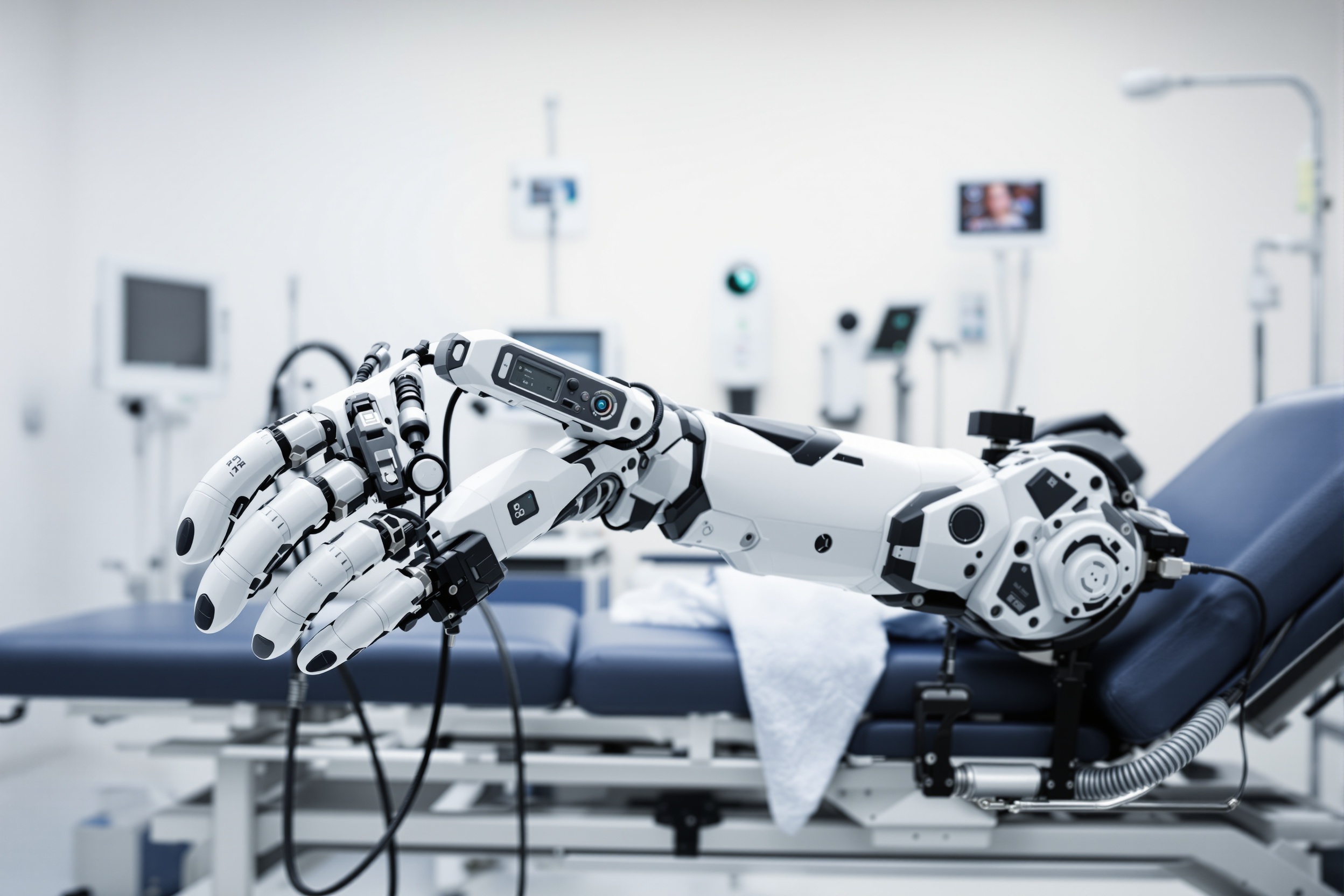
Robotics
Robotic devices provide high-repetition, task-specific training with real-time feedback to promote motor learning.
Virtual Reality
Immersive VR environments create engaging, task-specific practice opportunities that enhance motivation and neuroplastic change.
Artificial Intelligence
AI algorithms analyze movement patterns and adapt therapy in real-time to optimize neuroplastic outcomes.
FES (Functional Electrical Stimulation)
Targeted electrical stimulation activates muscles and nerves to reinforce motor pathways and enhance functional recovery.
Exoskeleton
Powered exoskeletons enable intensive gait training with proper biomechanics to drive lower limb neuroplasticity.
Gamification
Game-based therapy increases engagement and motivation, key factors in driving neuroplastic change through enjoyable repetition.
In Practice
How This Translates into Practice
Evidence-based implementation of neuroplasticity principles in your daily rehabilitation sessions.
Movement Retraining
Repetitive, task-specific exercises to rebuild motor pathways and restore functional movement patterns.
High-Repetition Training
Intensive practice protocols designed to maximize neural adaptation through thousands of movement repetitions.
Meaningful Tasks
Therapy focused on activities that matter to you, enhancing salience and accelerating neuroplastic change.
Ready to Harness Your Brain's Potential?
Our expert team is ready to design a personalized rehabilitation program that leverages the power of neuroplasticity for your recovery.
Email Us© 2025 Accelerated Recovery Centre (ARC). All rights reserved.